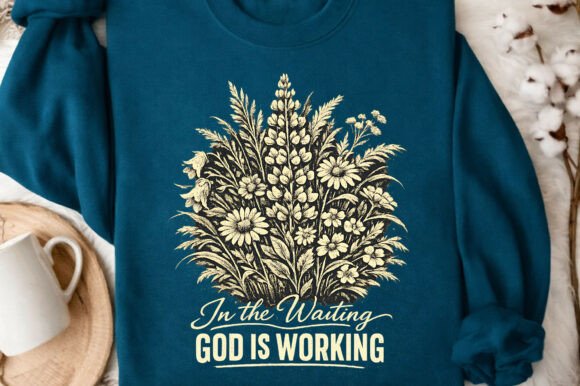
In the Waiting God Is Working Floral PNG
A Designer’s First Look: Calm, Clear, and Thoughtfully Composed
When In the Waiting God is Working Floral PNG landed in my inbox, I paused—not because it shouted for attention, but because it invited quiet observation. As an embroidery designer who’s stitched hundreds of faith-based and floral motifs for small shops, Etsy sellers, and custom gift clients, I immediately sensed this wasn’t just another decorative phrase. The layout balances soft botanical elements—gentle vines, open blooms, and subtle leafwork—with centered, legible lettering that breathes rather than crowds. It feels intentional, not ornamental. That matters when you’re planning a finished product, not just a digital file.
Real-World Test: Embroidering It on a Linen-Cotton Tote Bag
Last week, I used In the Waiting God is Working Floral PNG to embroider a 10” x 12” natural linen-cotton tote for a local boutique’s spring collection. Why that combo? Linen has texture, cotton adds stability, and totes demand durability *and* visual warmth. The design scaled cleanly at 4.5 inches wide—large enough to read without straining, small enough to sit gracefully near the top seam. The floral framing gave gentle visual weight to the phrase without overwhelming the fabric’s natural grain. Customers responded with comments like “It feels like hope you can hold”—exactly the emotional resonance this design delivers when executed well.
Where It Shines—and Where It Needs Extra Care
In the Waiting God is Working Floral PNG works beautifully across many T-Shirt Designs applications—but not all equally. On midweight cotton tees or sweatshirts? Excellent. The letterforms are generous, spacing is open, and the floral accents use moderate fill stitch density—no puckering, no thread nesting. As a machine embroidery design, it’s forgiving on standard stabilizer (medium tear-away + light cut-away blend worked perfectly).
But here’s where attention matters:
- Small hoop sizes (<5”): Avoid stitching the full design below 3.75”. Tiny flourishes near the letter “g” and vine endpoints lose clarity under 4 inches.
- Stretchy or thin fabric: Not ideal for lightweight knits or baby onesies without significant backing. The floral elements rely on clean edge definition—stretch distorts satin stitch flow.
- Dark or textured fabrics: On charcoal fleece or heavy terry cloth, test thread contrast first. Light ecru or soft sage thread reads better than stark white on deep backgrounds.
- Curved surfaces (like caps or curved pillow covers): The horizontal layout doesn’t wrap well. Best placed flat—center chest, upper back, or front panel of aprons and tea towels.
More Than Pretty: How This Design Builds Trust and Value
As a craft business owner knows, a phrase like “In the Waiting God Is Working” carries weight. It’s not casual—it’s comforting, reflective, often gifted during transitions: new parenthood, recovery, grief, or waiting seasons. When embroidered cleanly, it signals care—not just craftsmanship, but intention. That elevates perceived value. A customer buying a personalized gift isn’t just purchasing thread and fabric; they’re investing in meaning made tangible. I’ve seen this design increase engagement on Etsy listings by encouraging longer dwell time and thoughtful reviews (“I cried when I opened it”—a real comment from a buyer who ordered it for her sister post-diagnosis).
For boutique branding or holiday embroidery, it pairs naturally with neutral palettes—cream, oat, slate, sage—making it easy to integrate into cohesive collections. It also translates well into printable mockups: whether previewing on a cream sweater or a navy tote, the composition holds its calm authority without needing filters or overlays.
Practical Notes Every Embroiderer Should Check Before Stitching
This isn’t a “load-and-go” file—and that’s a strength, not a flaw. In the Waiting God is Working Floral PNG rewards thoughtful prep. Here’s what I do every time:
- Test on scrap fabric—same type and weight as your final project. Watch how the floral edges land on your chosen stabilizer.
- Review stitch density in your embroidery software. If fill areas look overly dense, reduce density by 5–8% for breathable fabrics like rayon blends or lightweight linens.
- Confirm hoop size before digitizing or loading. The design fits comfortably in a 5x7 hoop—but verify clearance if using a multi-needle machine or adding borders.
- Inspect small details manually: check the curve of the “y” in “Working,” the separation between vine stems, and whether inner petals remain distinct at 4-inch scale.
- Test black-and-white mockups. Does the phrase retain legibility against both light and dark backgrounds? Yes—thanks to generous kerning and bold-but-not-bulky letter weight.
- Use proper stabilizer. For structured items (aprons, patches, pillow covers), go with cut-away + topping for crisp floral detail. For softer apparel, tear-away + light iron-on works.
- Verify licensing. Since this is a digital embroidery file intended for commercial use, confirm whether resale of finished embroidered products is permitted—and whether derivative designs (e.g., color variants or simplified versions) require separate permission.
Final Thought: A Design That Serves Its Purpose
In the Waiting God is Working Floral PNG doesn’t try to be everything. It’s not flashy. It won’t dominate a festival booth or trend on TikTok overnight. But in the hands of a thoughtful embroiderer—a small shop owner curating meaningful merchandise, a church volunteer making comfort gifts, an Etsy seller building a trusted brand—it becomes quietly essential. It stitches true. It reads clearly. And most importantly, it honors the weight of its words without sacrificing craft. That balance—between message and medium, reverence and execution—is rare. Keep this one in your working folder. You’ll reach for it more often than you expect.